
Tags: Fire Restoration,

For non-emergencies use our contact form


Emergency? 24-Hrs
416.800.0000A fire can affect building materials, contents, indoor surfaces, and surrounding rooms. Therefore, technicians first inspect the accessible damage and determine which areas need cleaning, drying, removal, or repair.
First, technicians review fire, smoke, soot, moisture, and material conditions. This assessment helps define the scope of work and identify areas that need closer attention.
Smoke can travel beyond the immediate burn area. As a result, technicians may need to inspect nearby rooms, ceilings, contents, and concealed spaces before choosing the appropriate cleaning methods.
Soot can settle on walls, ceilings, floors, fixtures, and contents. Because materials react differently to residues and cleaning products, technicians select methods according to the surface and its condition.
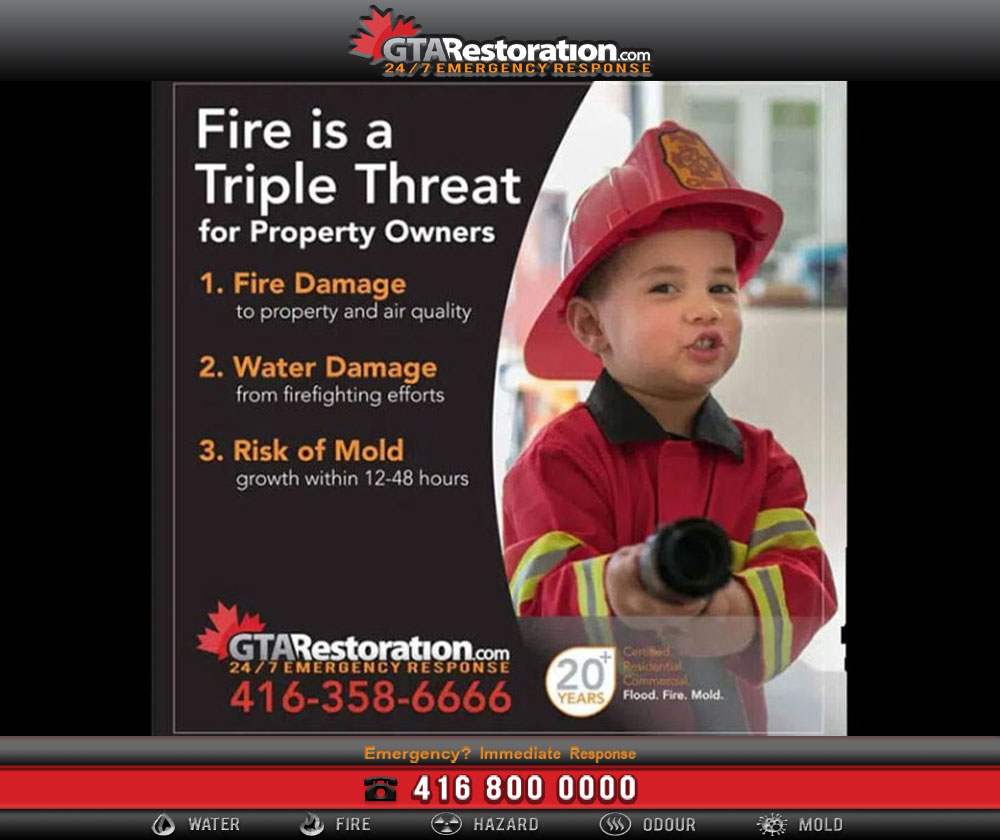
Fire hoses and sprinkler systems can introduce water throughout a property. When standing water remains, the restoration team can remove it before beginning controlled structural drying.
Next, moisture measurements help technicians identify areas that still require drying. They can then position appropriate equipment and monitor conditions as materials release moisture.
Smoke odors may remain in porous materials and concealed areas. Therefore, the restoration process may include detailed cleaning, air filtration, and deodorization based on site conditions.
Some materials respond well to professional cleaning. However, severe fire, heat, water, or residue damage may make removal and replacement more practical.
Once cleanup and drying reach the required stage, repairs can move forward. Depending on the loss, this may include drywall, ceilings, paint, flooring, trim, cabinetry, or other finishes.
Homes, condos, offices, retail spaces, and commercial buildings each present different restoration challenges. Consequently, GTA Restoration develops the work plan around the conditions at each property.
GTA Restoration assists with emergency cleanup, water removal, structural drying, smoke residue cleaning, odor treatment, damaged-material removal, and repair coordination throughout Toronto and surrounding GTA communities.
If fire, smoke, soot, or firefighting water has affected your property, contact GTA Restoration for an assessment. For emergency assistance, call 416-800-0000.
Nationwide, Local Pricing
GTA Restoration offers local flood & water damage repair, mold removal/remediation, asbestos removal/abatement, fire/smoke damage repair services and much more.
Search
After emergency responders allow access, technicians can inspect the damage and identify cleanup, drying, and repair priorities.
Yes. Smoke and soot can move into nearby rooms, ceilings, contents, and concealed building areas.
Fire hoses, sprinkler systems, and damaged plumbing can introduce water that may require extraction and structural drying.
No. Some materials respond to cleaning, while severe damage may require removal and replacement.
Depending on the conditions, technicians may use detailed cleaning, air filtration, and appropriate deodorization methods.
Yes. GTA Restoration assists residential and commercial properties throughout Toronto and surrounding GTA communities.
We Work Direct with All Insurance Companies
Wᴇ ᴀʀᴇ ᴄᴏᴍᴍɪᴛᴛᴇᴅ ᴏɴ ᴡᴏʀᴋɪɴɢ ᴡɪᴛʜ ᴇᴠᴇʀʏ ɪɴsᴜʀᴀɴᴄᴇ ᴄᴏᴍᴘᴀɴʏ ᴀᴄʀᴏss Cᴀɴᴀᴅᴀ & USA.
Learn more ↴ 
RELATED ARTICLES
follow us on 




Our Clients

Affiliates

Call Us 416-800-0000
Emergency? Immediate response 24/7
We cover all GTA 24/7.
Head Office:
250 Consumers Rd,
#10
Toronto, ON
M2J 4V6,
Open 24 hours
Downtown Office:
1 Toronto St,
#10
Toronto, ON
M5W 1A1,
Open 24 hours
For non-emergencies use our contact form
Not sure what you need?
Call us today to find the best product for your situation.
Head Office:
101 Lebovic Ave,
Unit #10
Scarborough,
ON, M1L 4T7
Hours
24-Hours Open
Downtown Office:
250 Yonge Street,
Unit #1A
Toronto,
ON, M5B 2L7
Hours
24-Hours Open
The Transformation: What Happens Before and After Fire Restoration with GTA Restoration
Get a quote today